Intent
Intent is a consumer electronics lighting design sprint that explores AI-integrated workflows from concept to completion. Designed for desk or bedside environments, Intent addresses the growing challenge of phone distraction in work and rest spaces. With 50% of employees reporting regular phone distractions and workers spending an average of 2.5 hours per day on non-work phone activities, Intent offers a simple solution: an integrated wireless charging station positioned on the lamp's back, physically separating the device from immediate reach while keeping it charged. Warm, adjustable lighting promotes focused work sessions or restful evenings. This project demonstrates how AI tools can accelerate the design process while maintaining design intentionality, employing generative AI, rendering platforms, and traditional CAD throughout the development cycle.


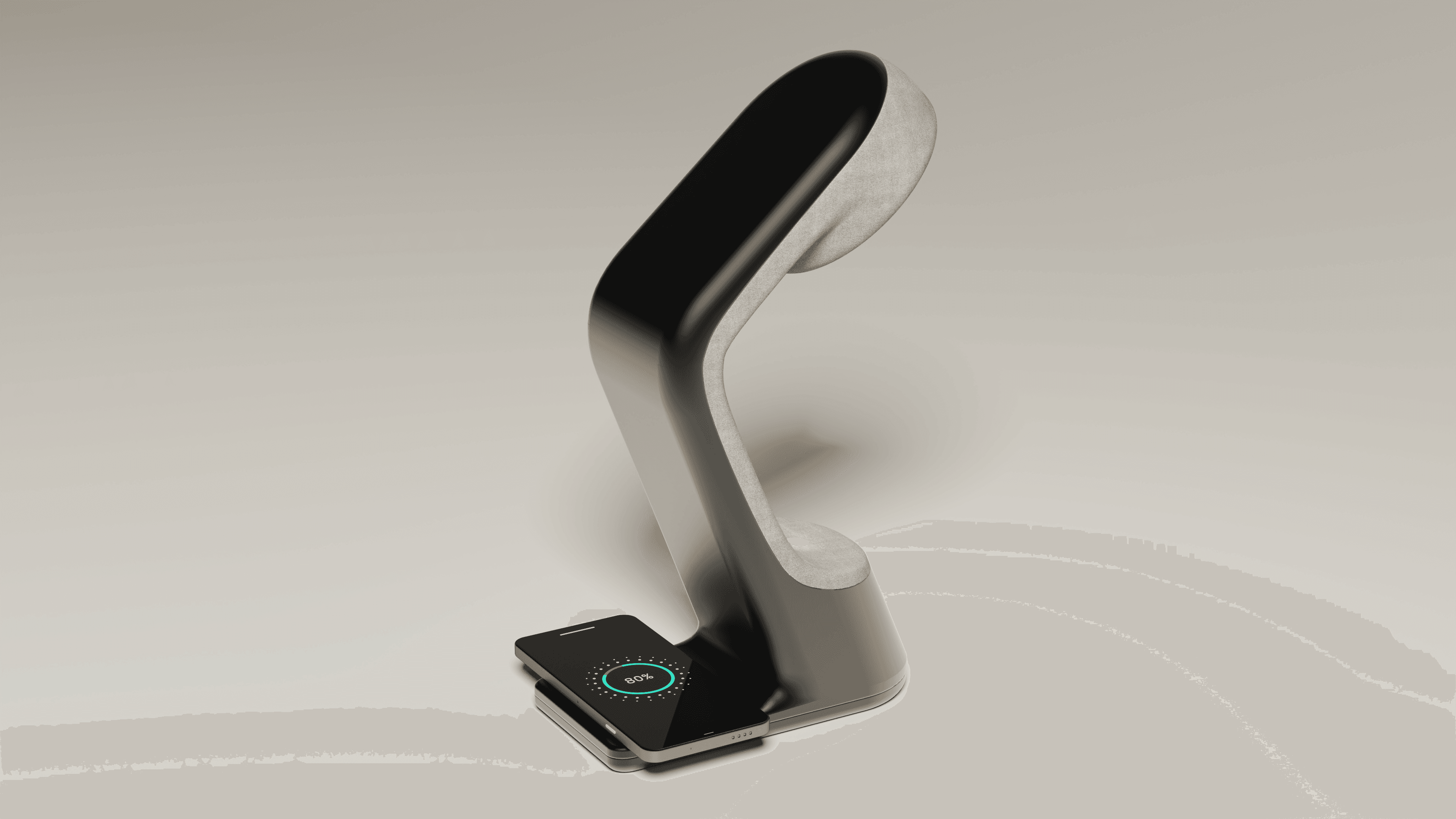
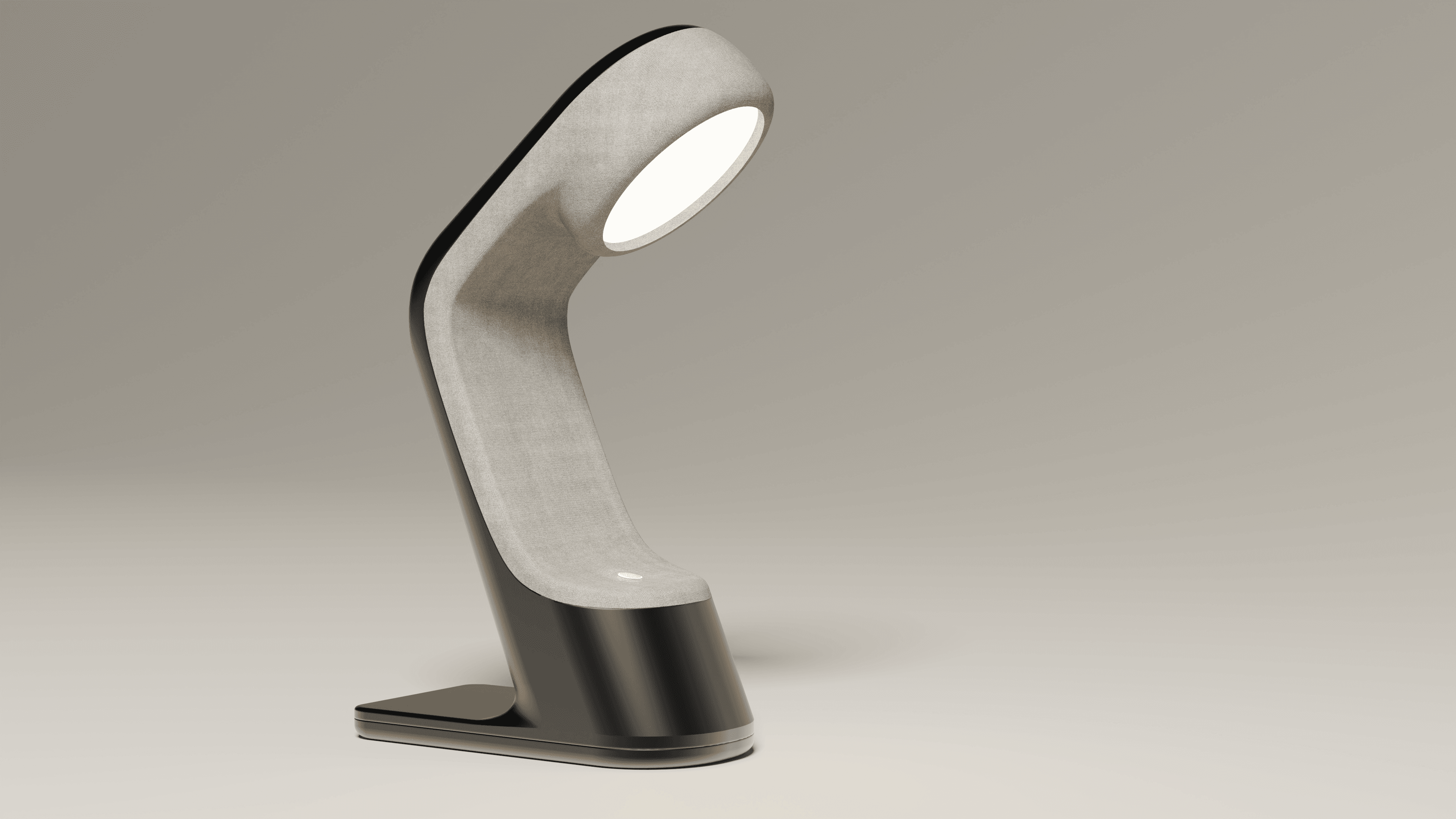
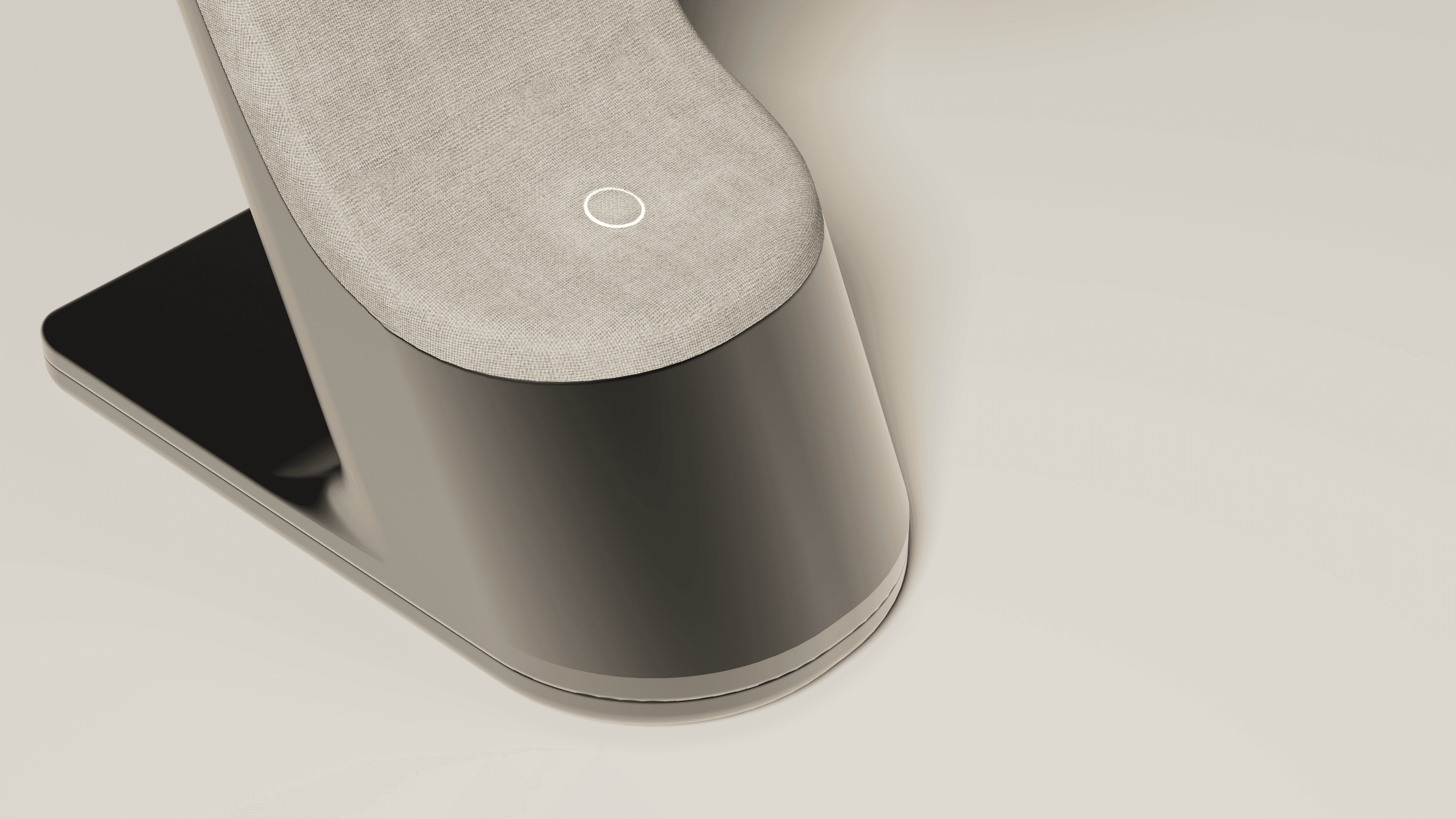
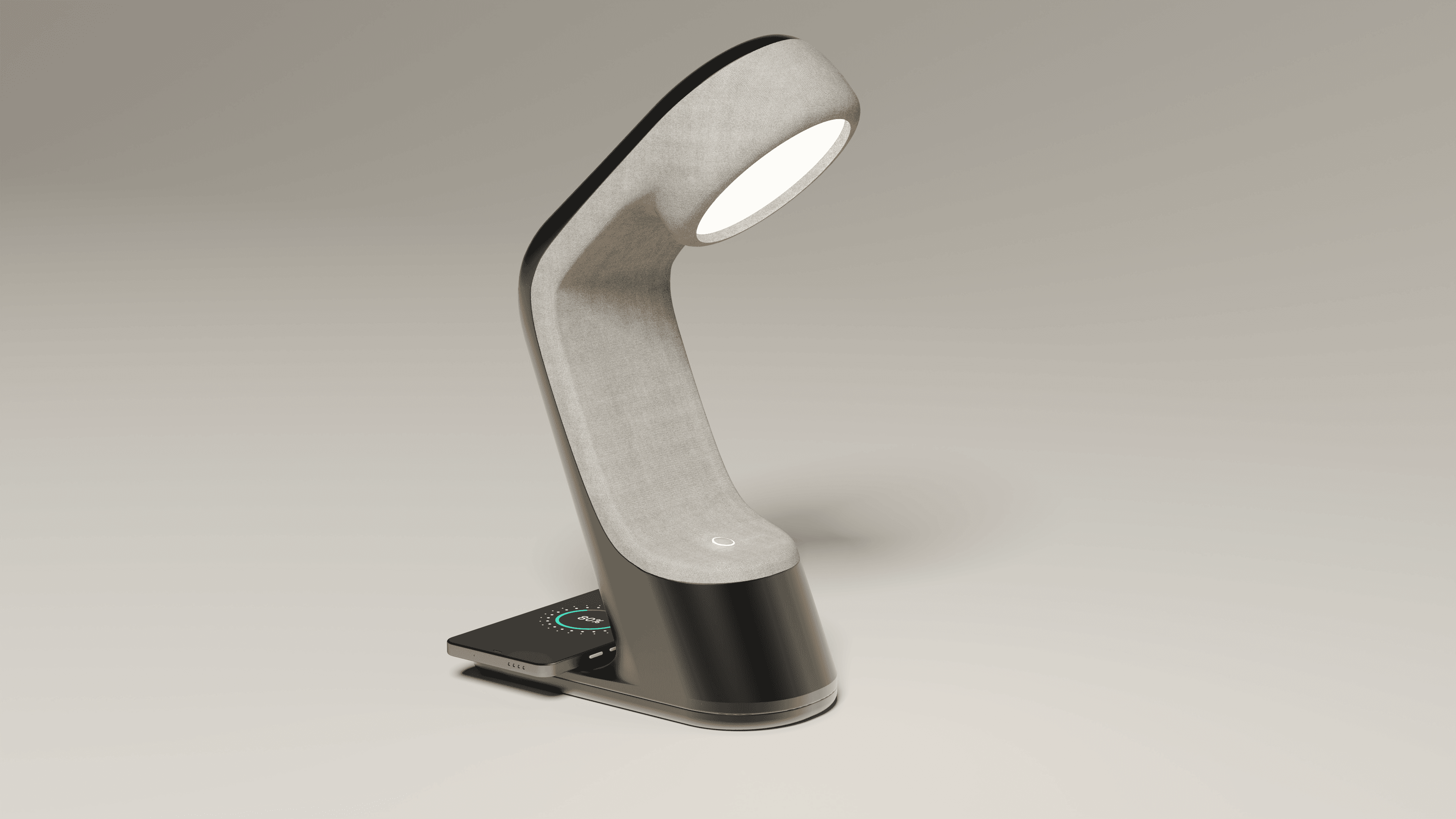
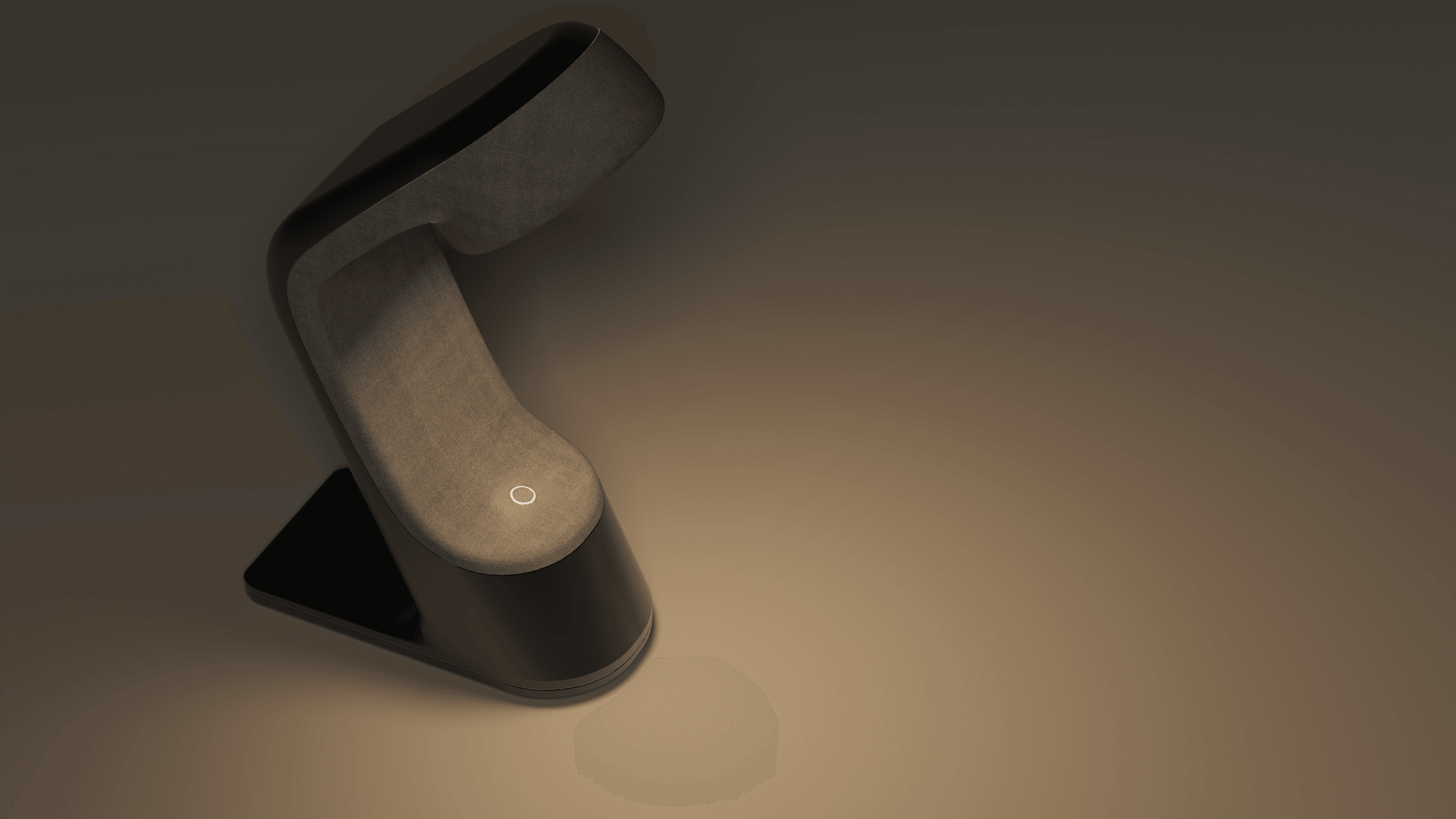
Intent has touch-sensitive controls, warm LED lighting to reduce eye strain, and integrated wireless charging positioned on the rear to keep phones accessible but removed from the workspace. Phone distractions cost U.S. companies $15.5 billion annually in lost productivity.
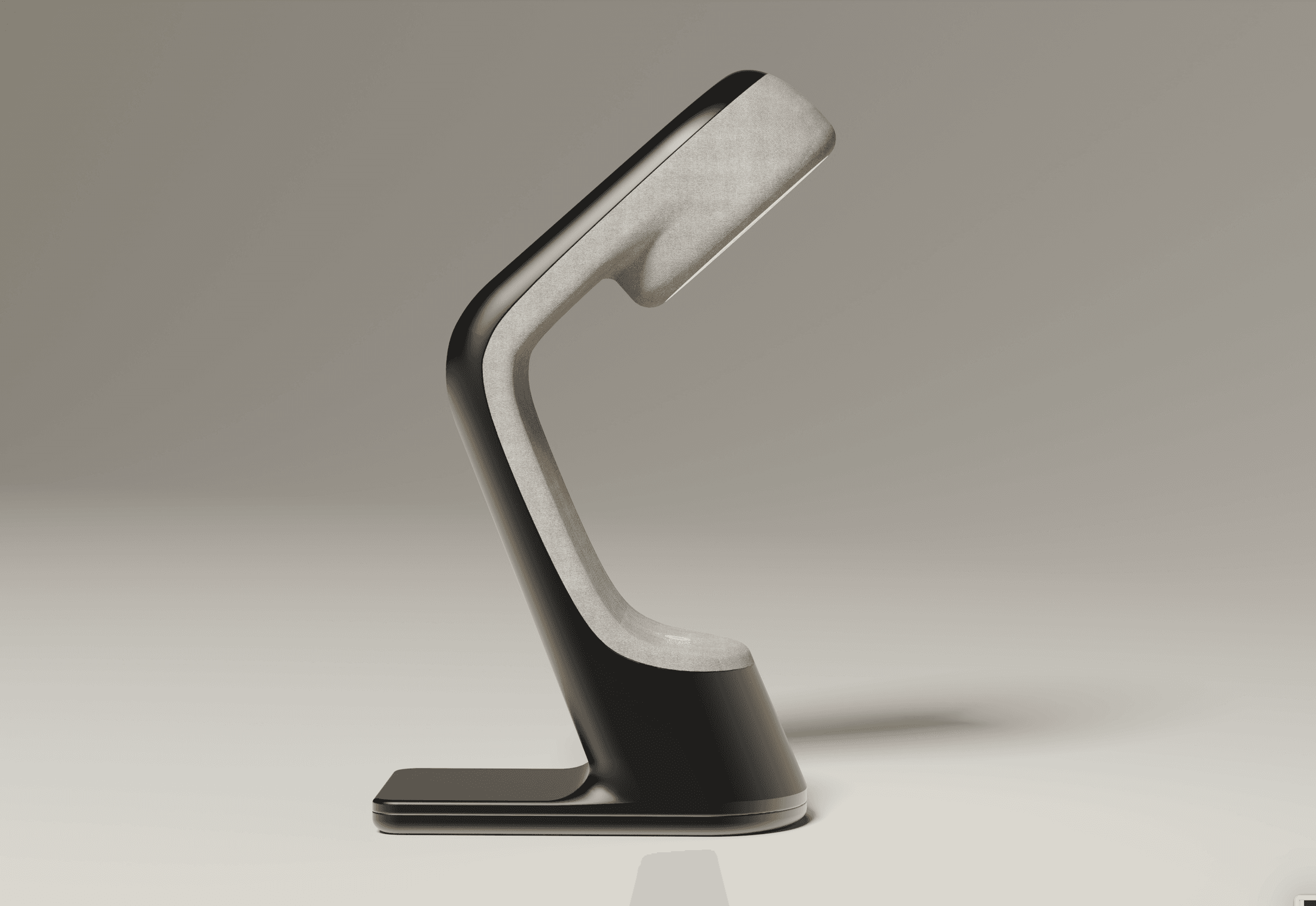
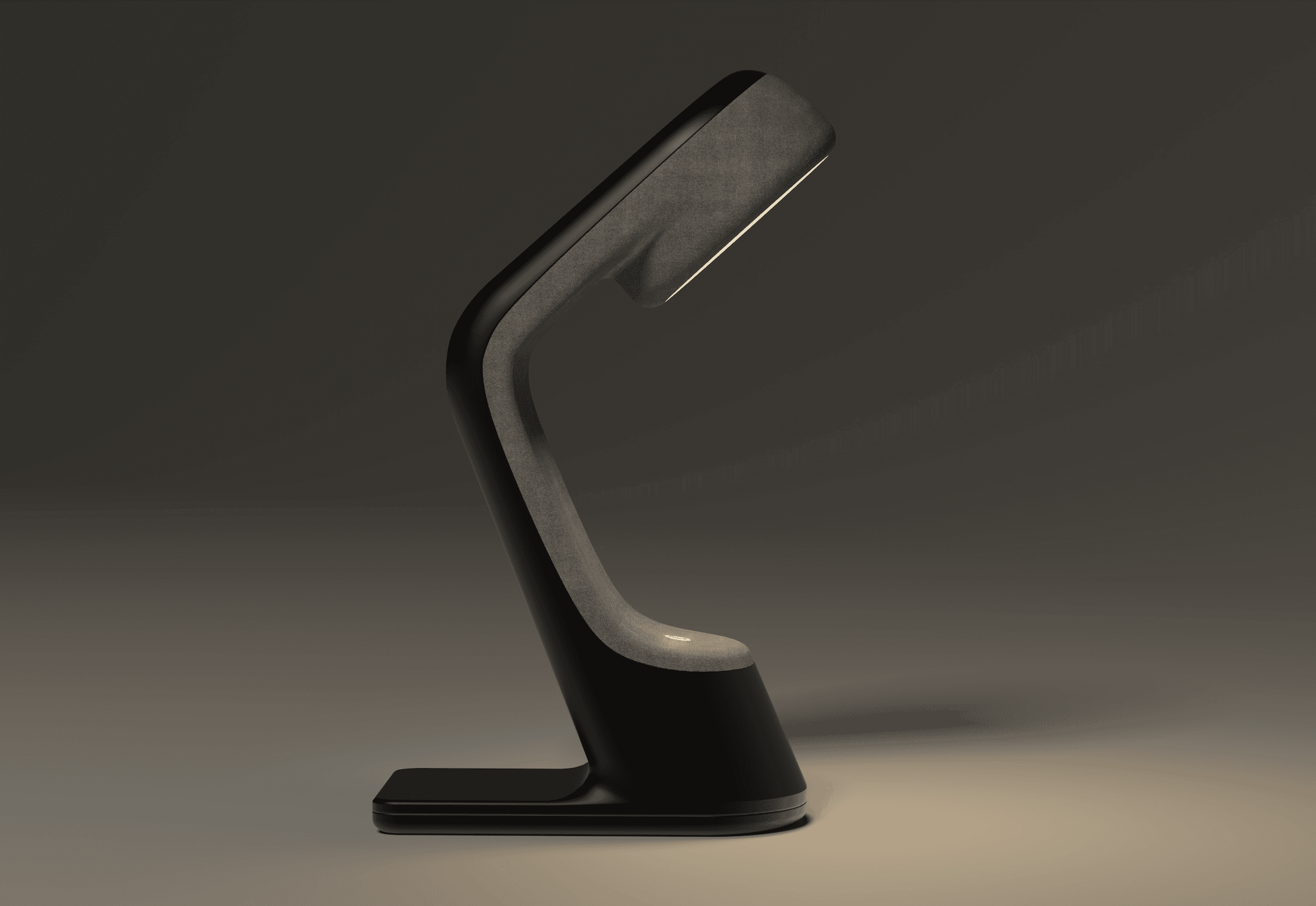
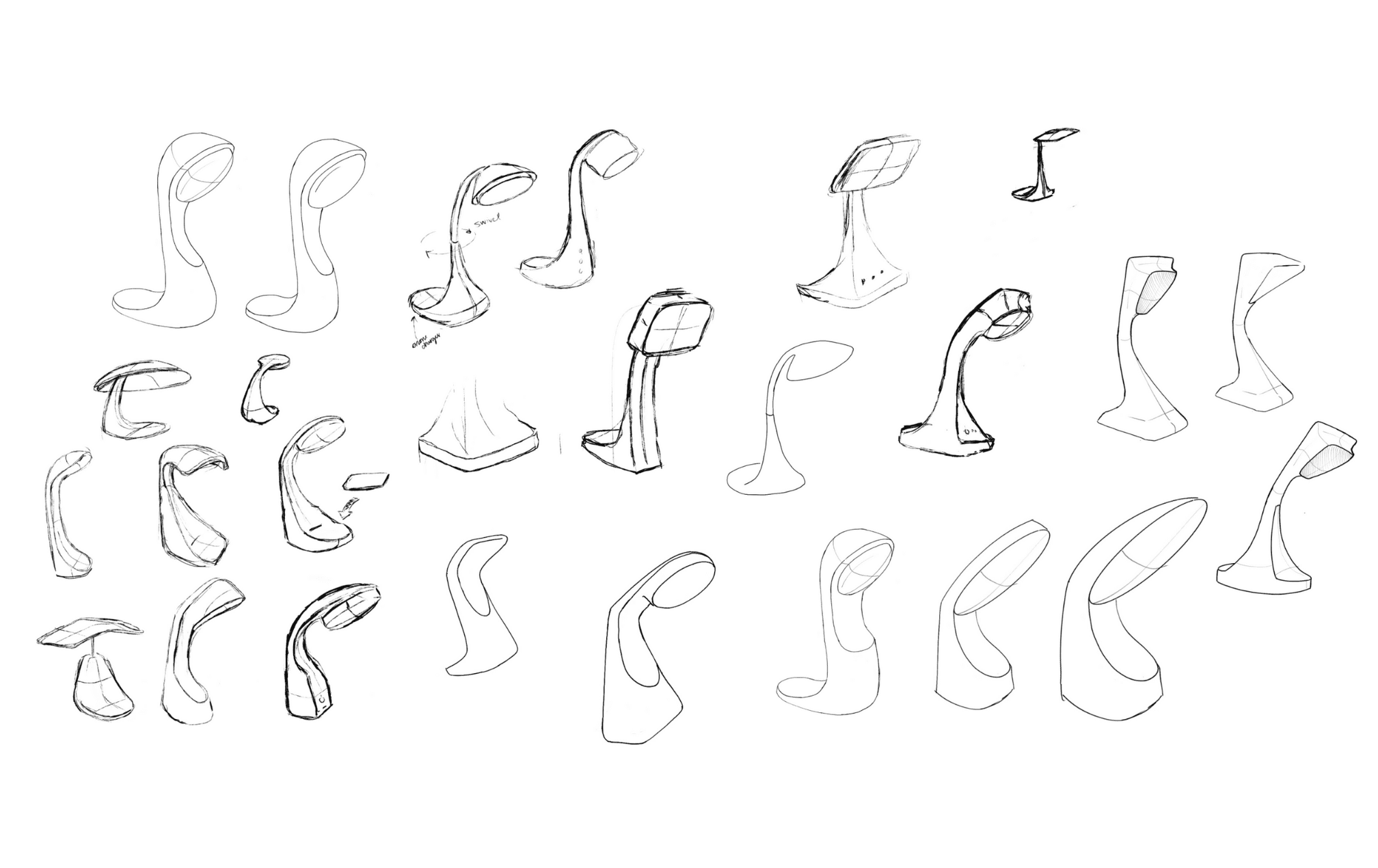
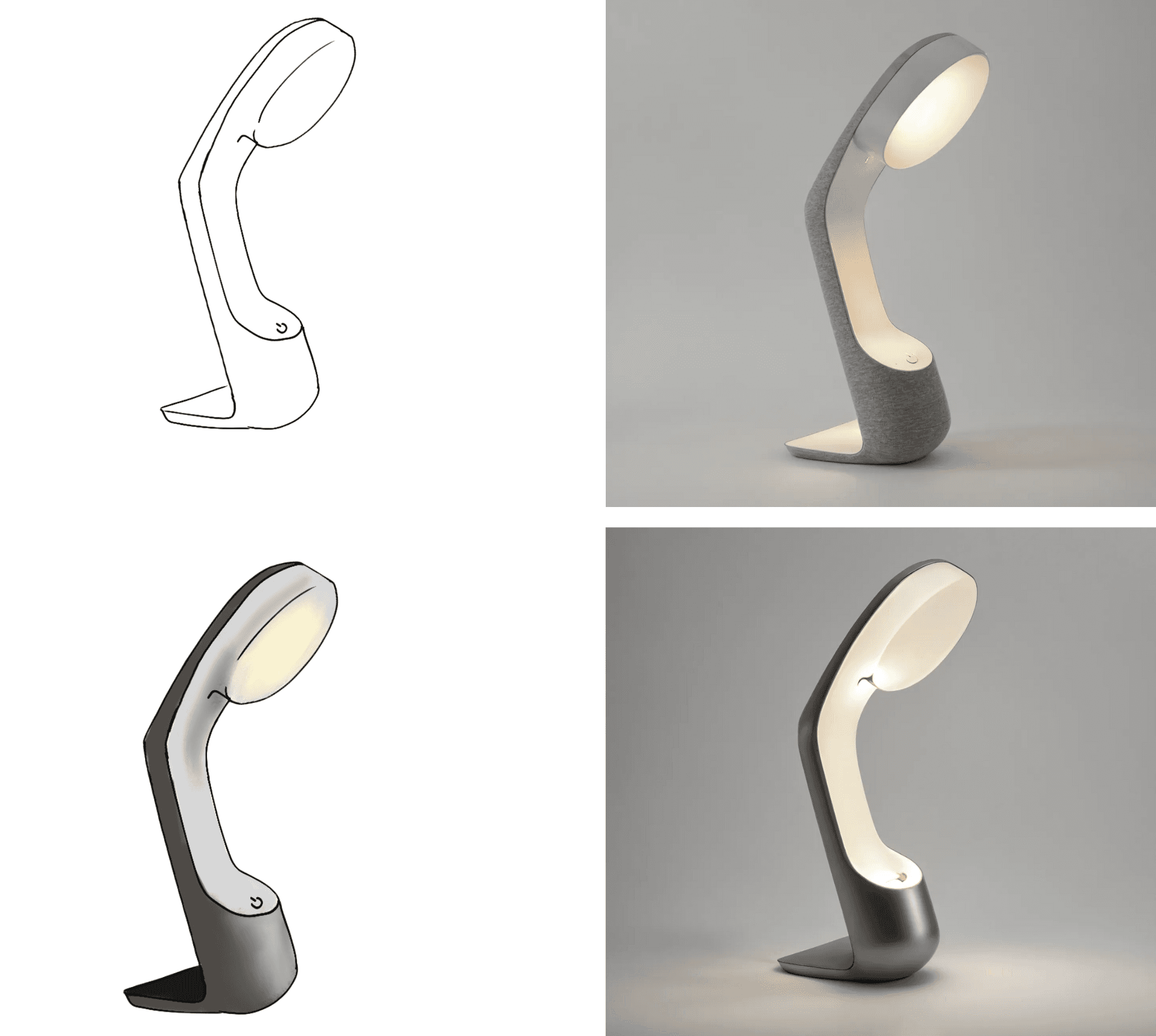
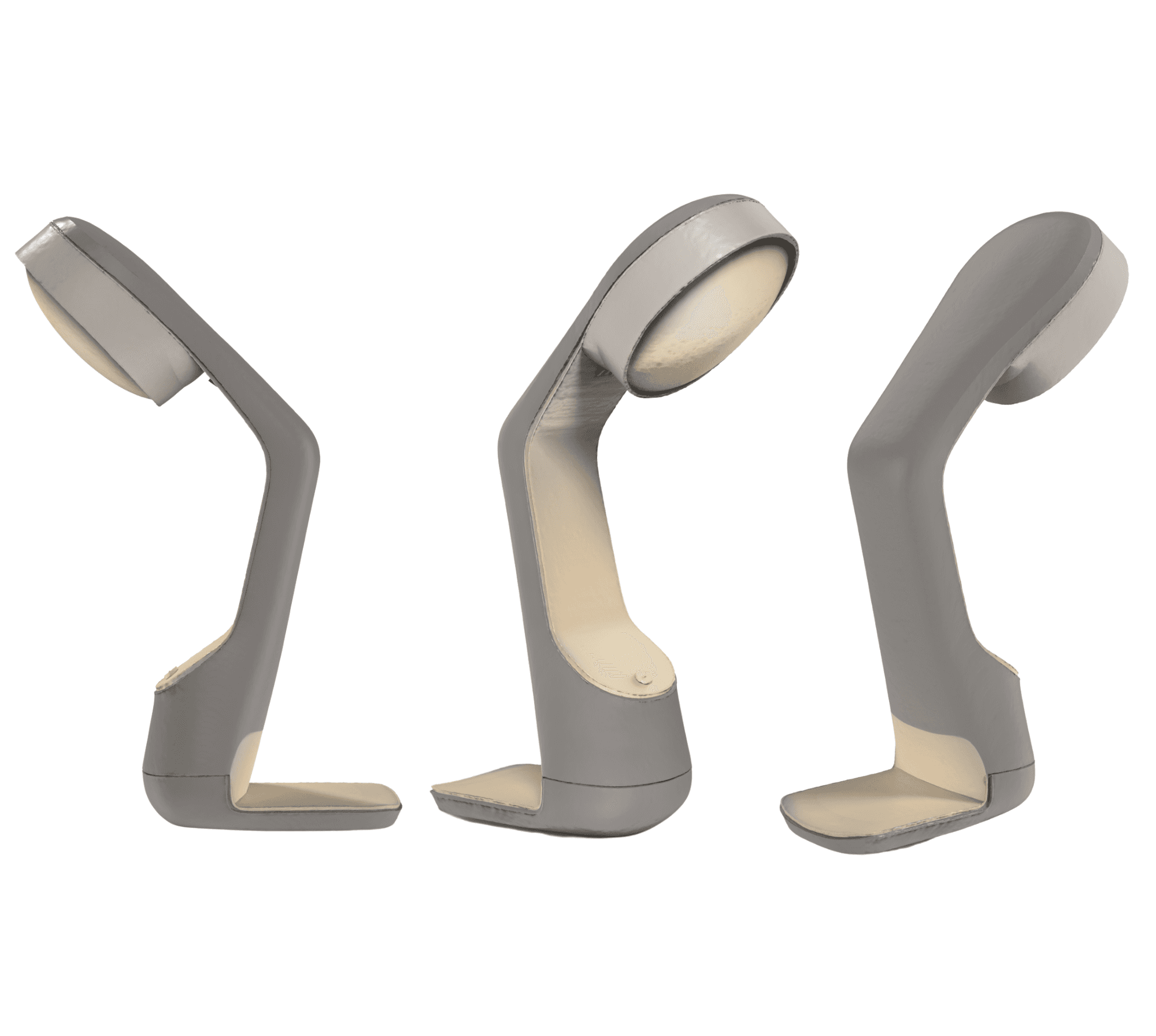
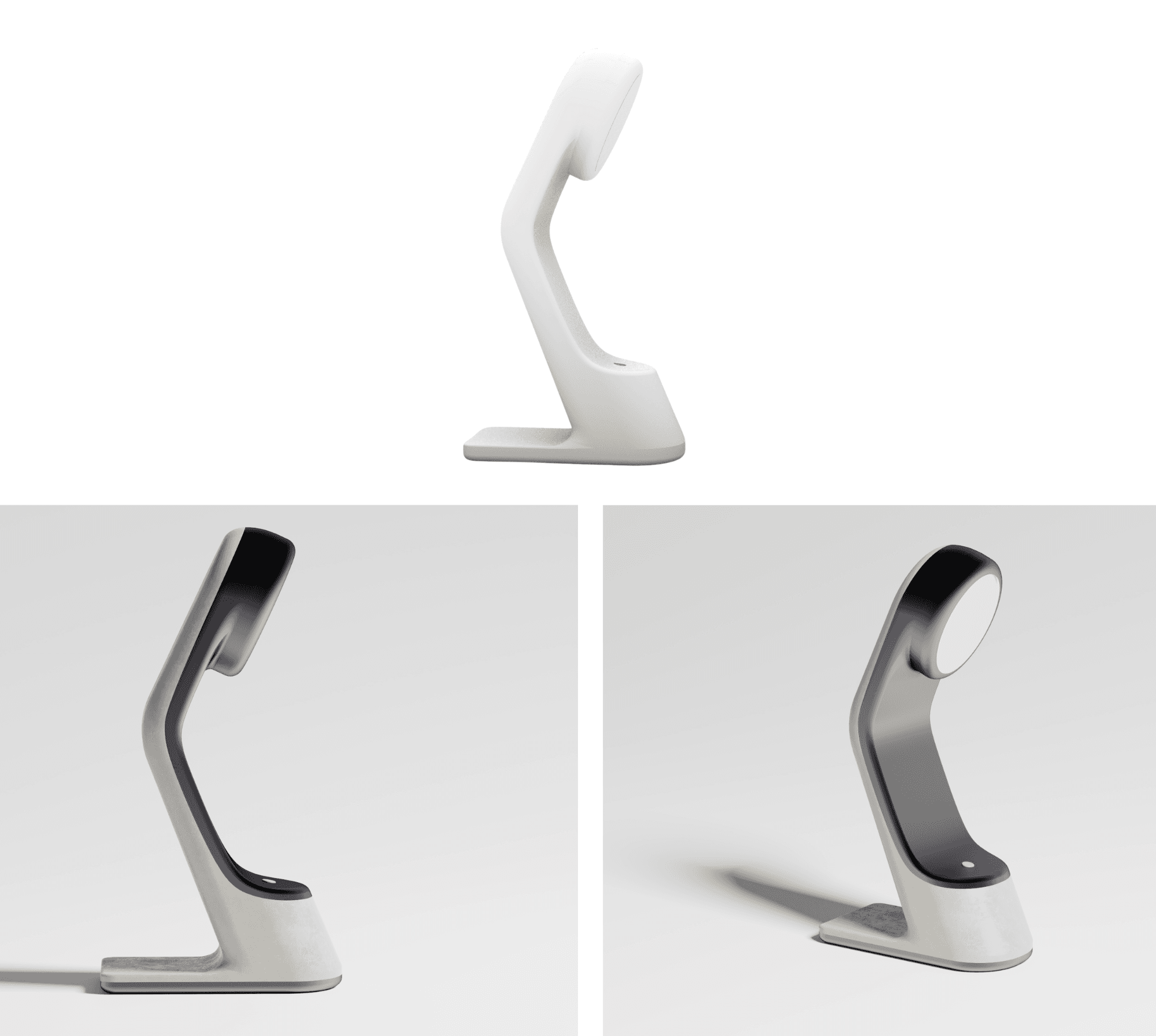
The design process began with Midjourney image generation to explore forms, which informed hand sketches that were refined through Vizcom rendering. The most successful rendering was translated into Hitem3D for initial modeling, then refined in Rhino.
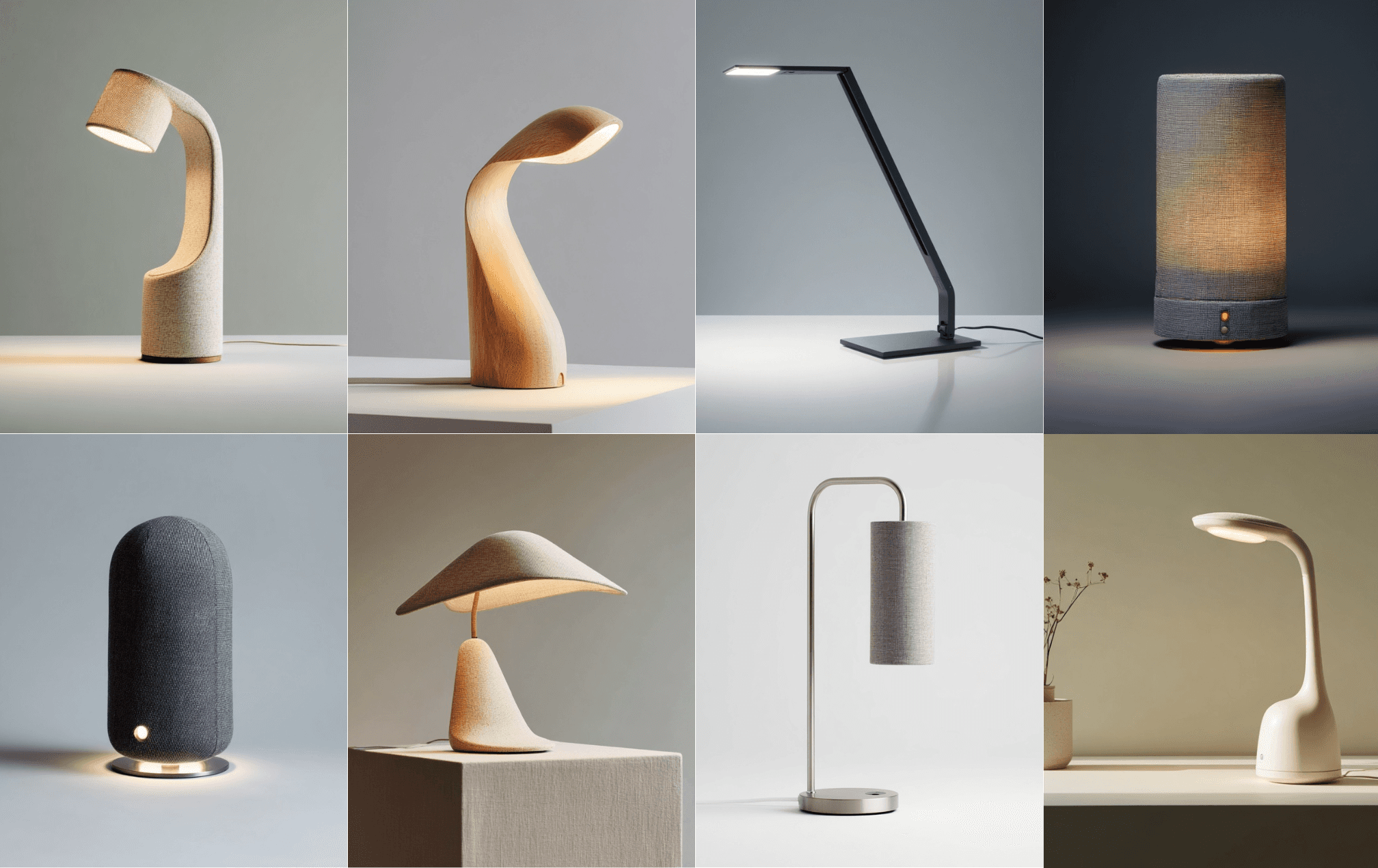
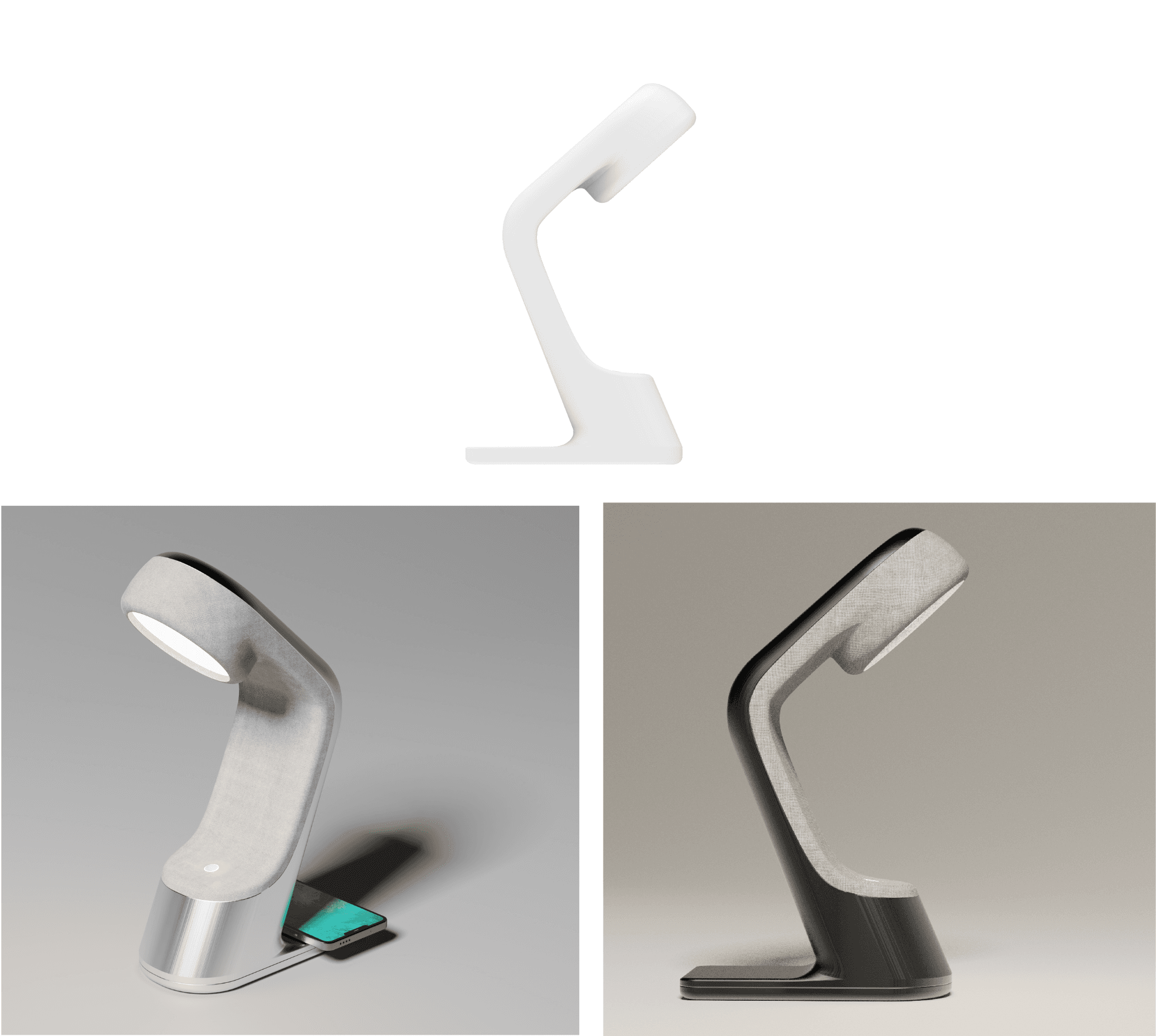
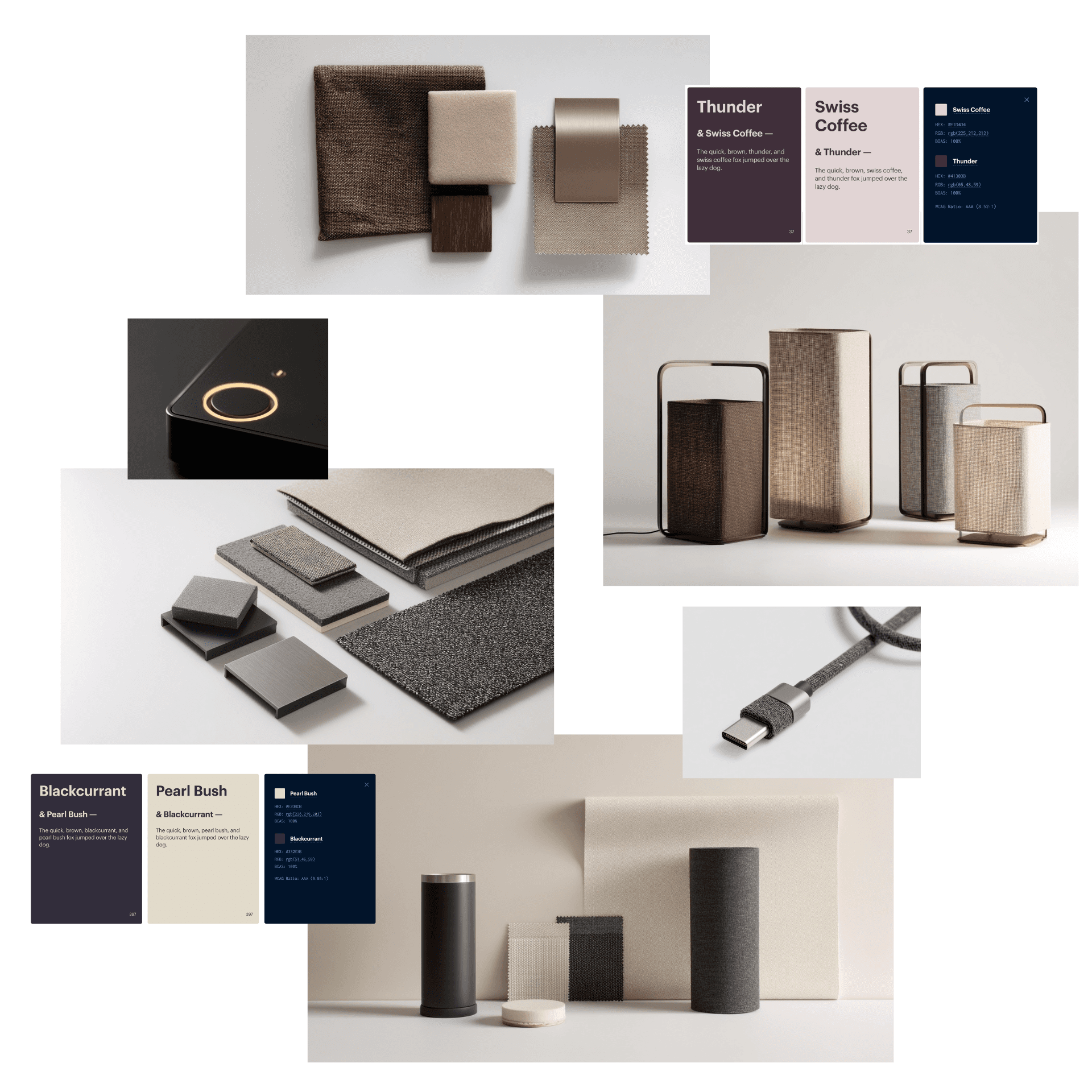
Khroma generated color palettes that informed Midjourney moodboards exploring material applications. The most effective CMF direction was adapted in the final Keyshot renders, using AI-generated concepts as inspiration while maintaining material authenticity.
Midjourney generated quick contextual renderings showing Intent in a realistic desk environment, demonstrating how generative AI can complement traditional design visualization methods.


